Concept
VR
Ideas for creating VR art for the project like an environment that a viewer could walk around and explore. Or as a prototype game environment.
AR
A printed zine with interactive AR features, that uses marker-based AR to project models over each page or double page spread of the zine. A zine is a folded booklet made from a sheet of paper usually containing a comic or small collection of art.
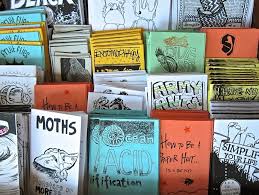
Why marker-based AR and not SLAM, location-based or LIDAR?
I want the AR experience to not be dependant on the environment of the user. Marker-based AR only needs the target image and a camera, the environment doesn’t matter as long as it is bright enough to see the image so it is more accessible to users. The experience is based on the zine like AR art in a gallery it is dependent on the physical media instead of the environment.
I had ideas for either a narrative comic zine with animations, 3D models and sound added through web AR or an informational zine with annotated models, animations and facts.
The narrative zine idea is a horror comic with creepy models popping out of the art on the pages, ominous sound effects or music and animations. Seeing AR with occlusion gave me the idea of having a creepy modelled hand popping out of a dark doorway in the 2D comic.
Weevil educational zine – Content Development
The art for the zine will consist of 3-6 weevil art pieces – as there can be art on each page or each double page spread.
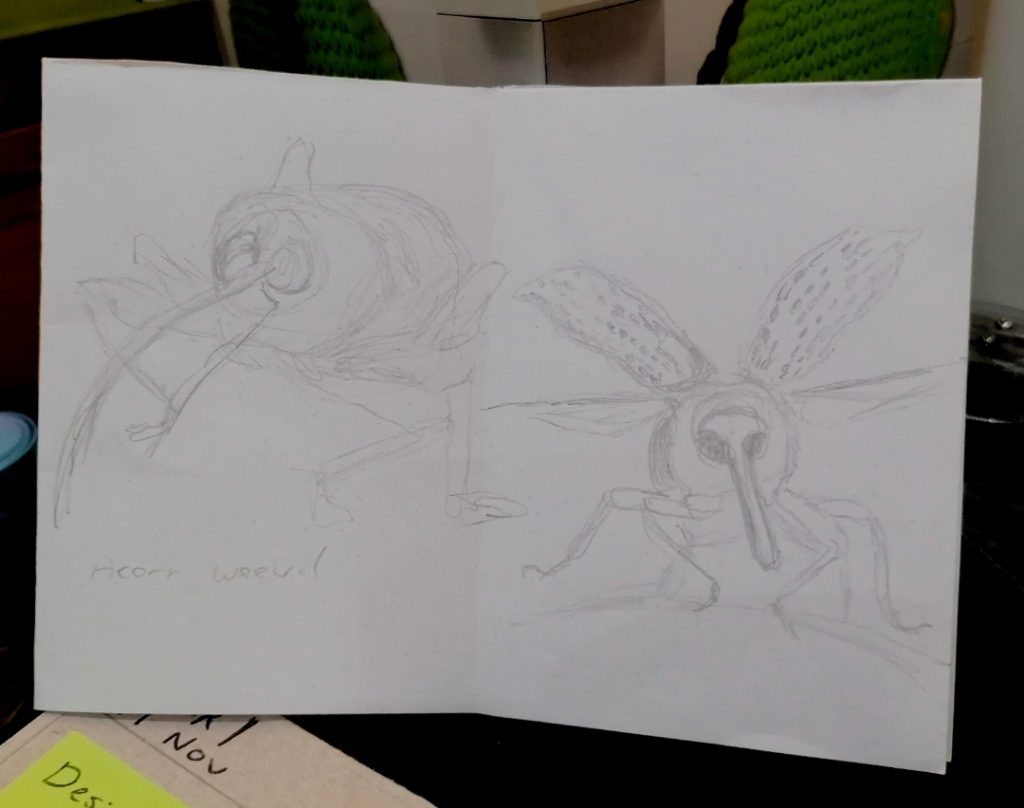
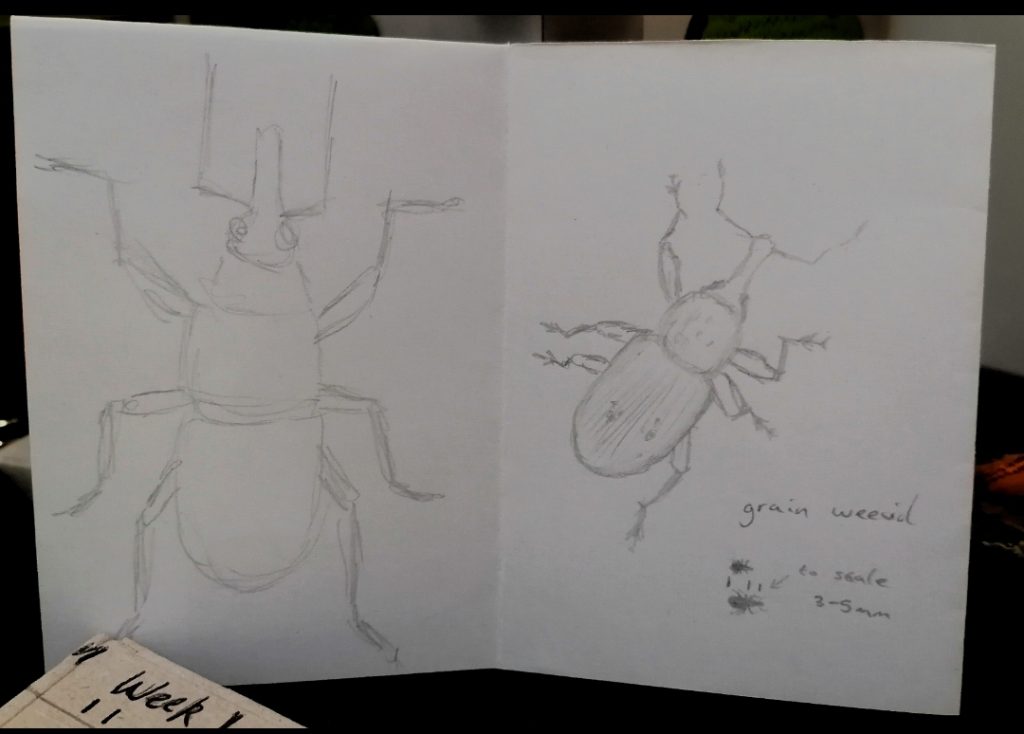
Brainstormed ideas for what the AR can add to the weevil zine:
- Facts about weevils
- Images of different species of weevils – scroll through gallery of weevil pictures with text below naming them
- 3D models of different species of weevils to show their variety eg pea leaf weevil vs vine weevil vs acorn weevil
- Free use models of weevils to show a variety of them
- Life cycle of weevils
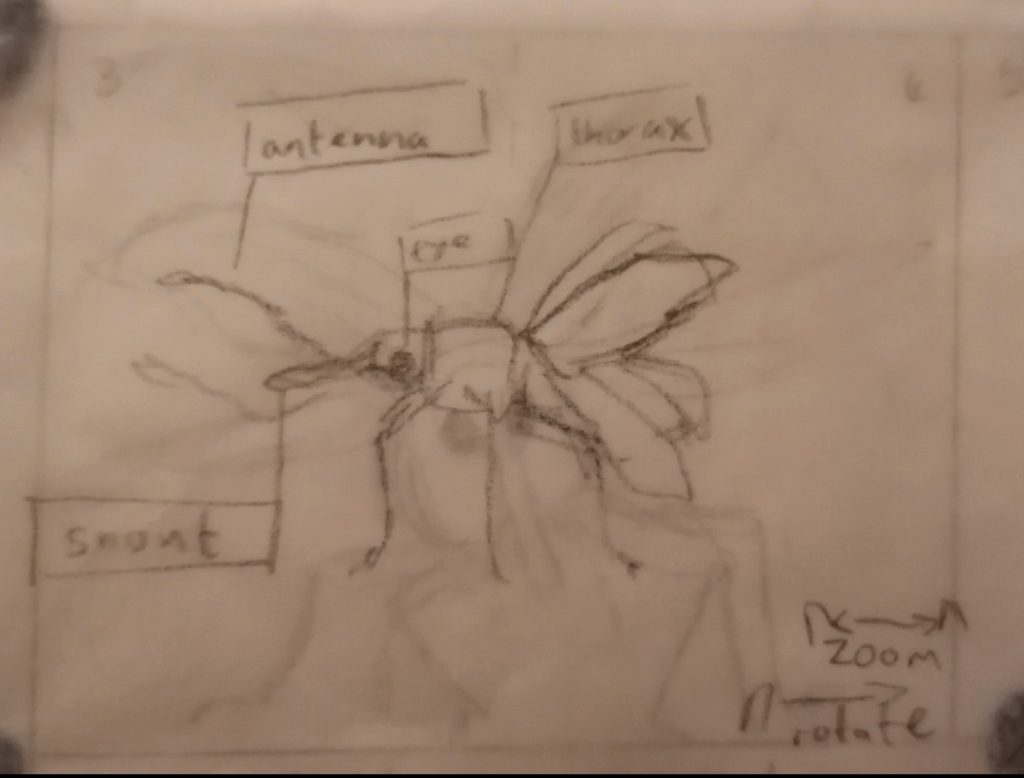
- Annotated 3D model that can be rotated with camera facing labels
- Animated 3D model of weevil in flight or taking off
- Animated to scale (3-5mm) weevils crawling over the page – maybe with a zoom option
Research – Examples of target based AR
Artistic AR
The moving particles in this AR art could lend itself to graphics in a horror comic particularly well. I really like what the particle effects add to the artworks and could imagine making similar effects to overlay on the horror zine idea.
Modern Polaxis is a comic that uses AR in it’s storytelling to add paranoid delusions and conspiracy theories that aren’t visible in the pages of the book. This idea of adding things that people in the story can’t see or adding another sinister layer to the story would work really well in a horror comic.
Educational AR
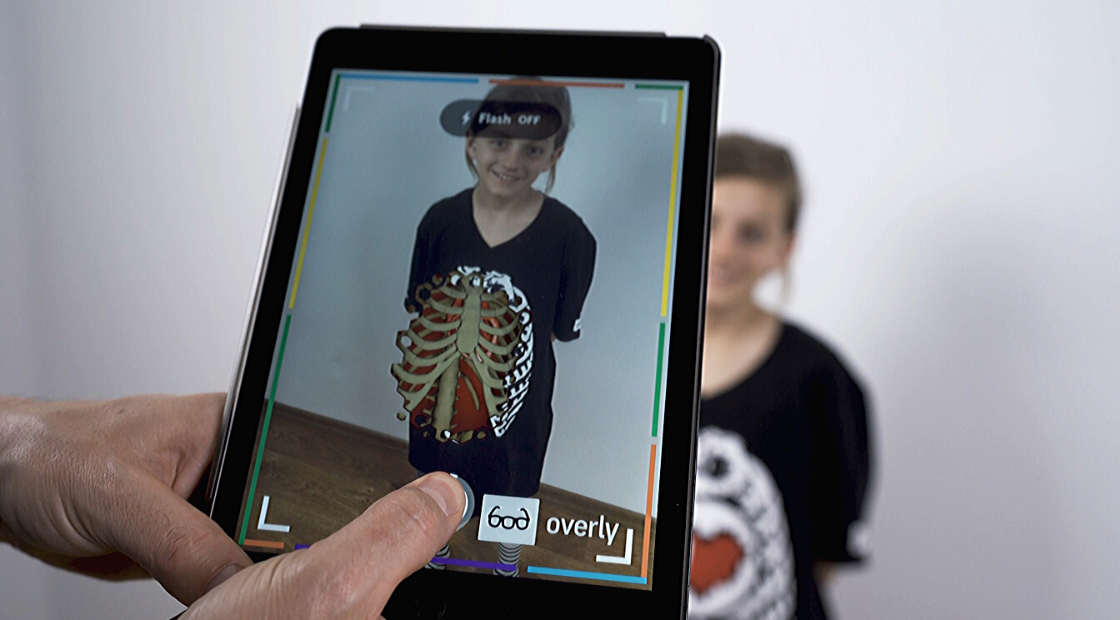
Educational target based AR by Overly projects anatomical models onto clothing, projecting onto clothing allows another layer of interactivity from the person who the model is projected onto. This could make it more fun for students in classrooms however the person who is having the model projected onto them wouldn’t be able to see the AR effect.
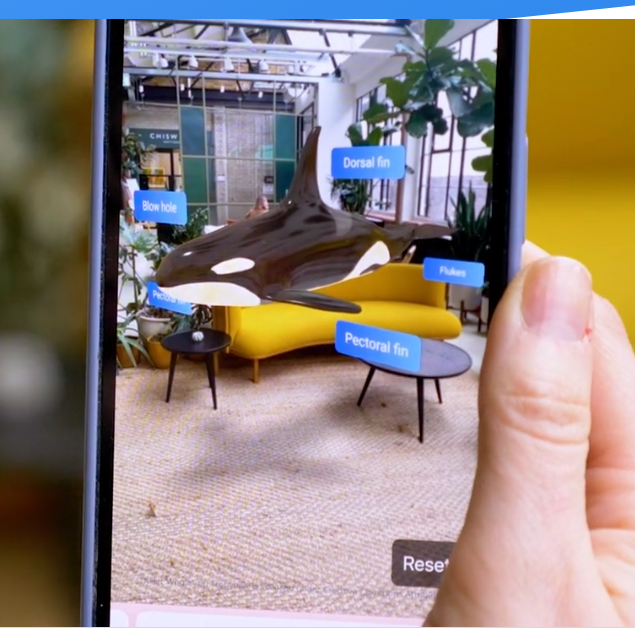
This example from the Zapworks homepage demonstrates the style of annotated educational model that I would create for the educational zine about weevils. However in my version I want the labels to rotate to stay camera facing when the model rotates so they stay readable from all angles.
These AR textbooks allow students to watch the bugs crawl around their desks and move them around however I think the AR bugs are distracting from the information in the book rather than reinforcing it. In my zine the information will be displayed through the AR to make it more exciting and more likely to be paid attention to.
How is my idea different from these examples?
None of these examples have a model that is annotated and animated and it is not something I have found when looking at other educational AR examples. Lots of educational AR I have seen only shows 3D models and not the information related to it making the information less of a focus.
The key difference between the AR insects example and my projcet is that my project is giving more in depth content on one species while the book has models of lots of different species without any educational material in the AR additions. I wanted to create a zine about weevils as they are not super well known despite being one of the largest families of animal.
Education about certain topics can reduce fear of them, my hope is that by teaching people about small insects the zine can help people be less fearful of bugs and care more about biodiversity and healthy ecosystems.
Content development
Final decision for assets to create in AR:
- annotated and animated model where the wings open up
- pop up facts about weevils
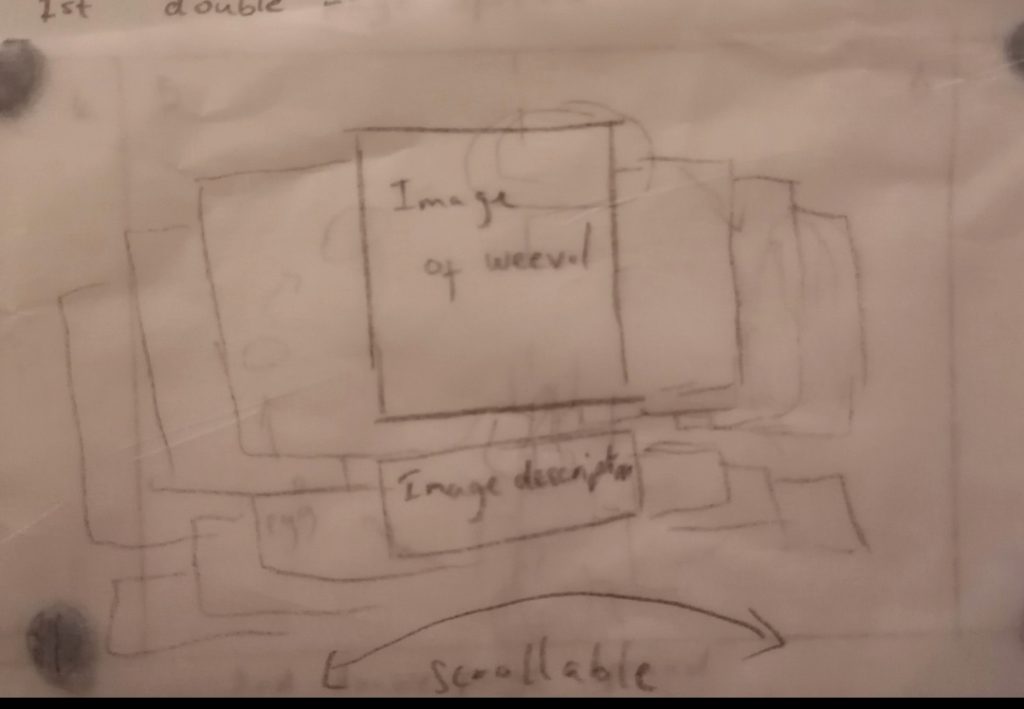
- gallery of different species of weevils and different life stages
Planning
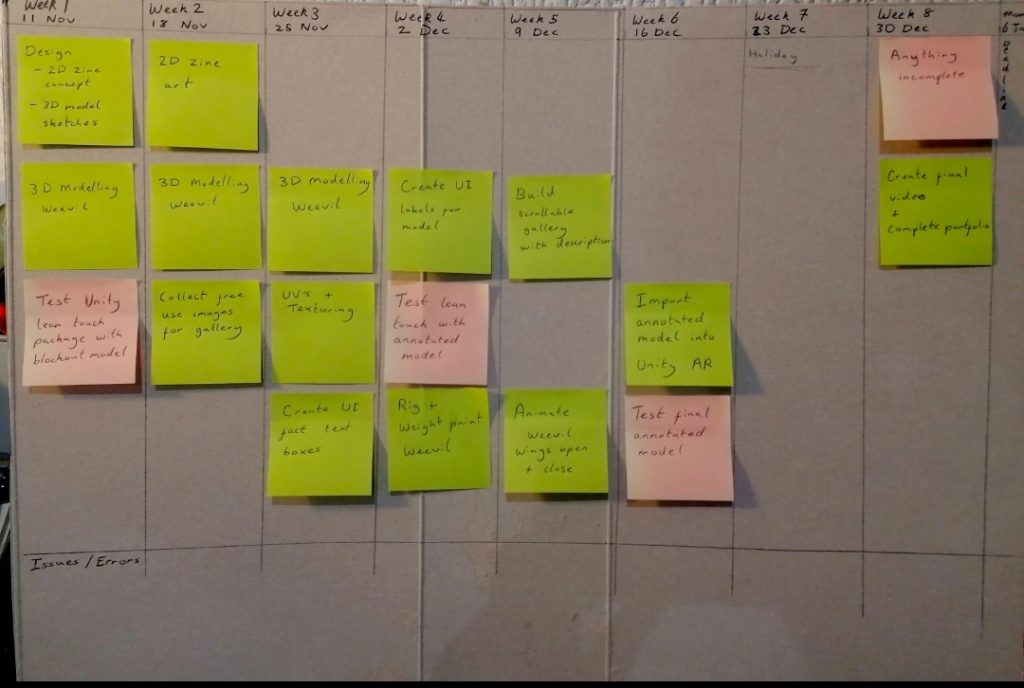
I am planning to follow a waterfall methodology but apply the idea of producing prototypes throughout that agile methodology relies on to produce test prototypes at various points in the project to ensure I won’t run into unexpected issues at the end of the project.
In the first week while I create final designs for the 2D art in the zine and 3D model I will test using Unity AR foundation with the lean touch package and produce a prototype to check it works as expected.
Then in week two I will finalise the 2D art and digitise it to be ready to print, I will also continue working on the 3D model and will collate images to add to the AR gallery.
In week three, I will complete the model and create it’s UVs and textures. As well as creating the UI text boxes for the AR facts in the first page of the zine.
Then in week four, I will be working on adding the labels to the annotated model as well as rigging and weight painting it and testing how the annotated labels are displayed in the AR and if they stay camera facing when the model is rotated by the user.
In week five, I will build the scrollable AR gallery and animate the weevils wings opening and closing.
In week six, I will import everything into unity and test the AR zine and do any necessary debugging.
Then after a break for Christmas, I will finish anything that has taken longer than expected and create the final video and finish my portfolio.
Designing for AR
UX I will use a 20px height for user interface features which is made larger for each metre it is away from the camera, for AR also making sure models aren’t too big so that you have to move away from the target to see it. The 3D weevil model should be scaled so that it fills the screen from the expected distance people will scan the image by testing the scale in prototypes.
I will ensure I keep the poly-count and file size of models and additional materials low to ensure the experience can run easily across multiple devices and web browsers.
Storytelling and narrative
The physical zine will ensure users work from the cover page to the back as they follow the natural flow of the booklet so the AR additions can be set to be viewed in a specific order. An educational zine would most likely lack a story if it was just factual whereas the comic would be a short story in a zine.
User centred design
The zine could be displayed in a science museum or zoo as it can teach guests about weevils. It is especially suitable for children to learn about weevils as the AR makes it a more exciting way to learn since it’s interactive.
A teacher could use the zine to teach children about insects in school in order to encourage them to take interest in biology and nature. My AR experience would be easy to use in a classroom as it doesn’t require moving around and can be looked at sat at a desk or shared between students at the same table.
Prototyping and testing
Mock-up with ZappAR
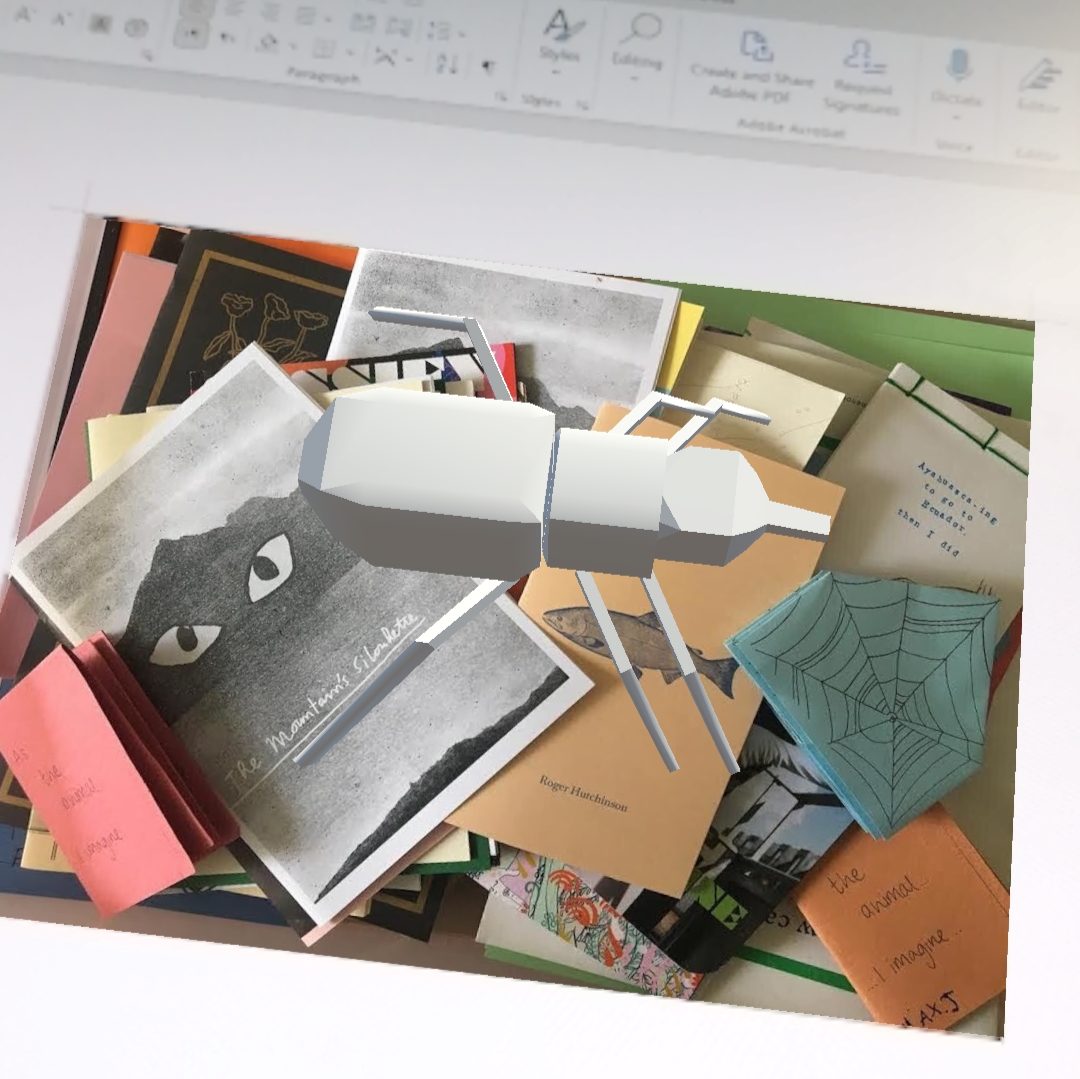
After creating a rough weevil block-out in maya I imported into unity and created a basic Zapworks AR project but using the unity plug-in didn’t allow for any editing using the ZappAR designer so I decided to skip unity and upload my model into the Zapworks designer to animate it.
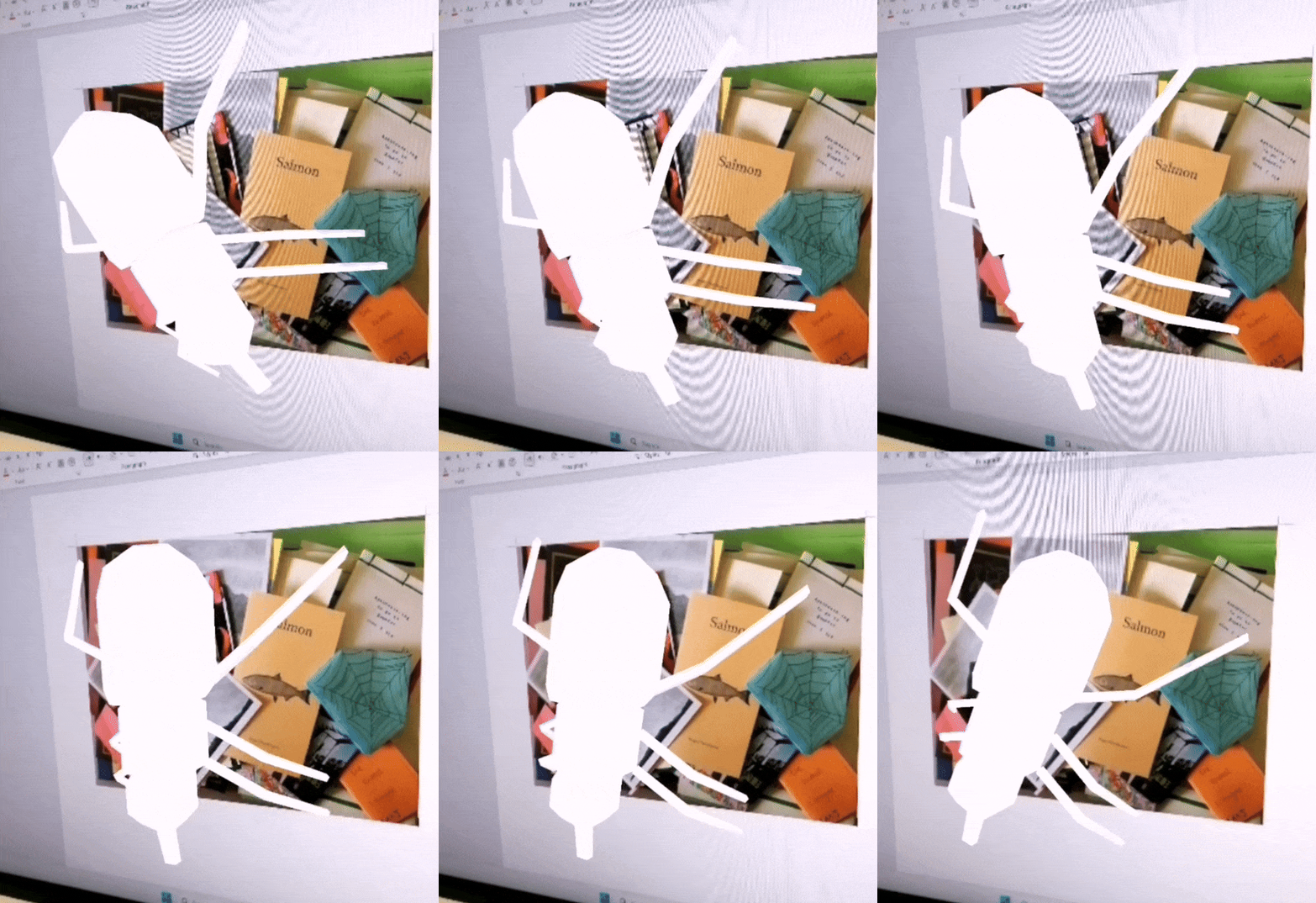
I found the animation options in ZappAR too simple as I want create an annotated model that could be rotated by the user to look at the annotated parts closer while the labels follow with it and stay camera facing and ZappAR only allows for constant rotation. It also made the model look very overexposed.
Due to ZappAR limitations like upload size limits meaning there could be issues adding animated or complex models and limited features allowing interaction with the uploaded models I’m looking into using Unity AR foundation.
Tech and tools – marker based AR
I will be modelling the weevil with labels and animated wing opening and closing in maya, then texturing it using substance painter. If maya is too difficult to get a high detail model, I might use Zbrush once the model is at a good low poly shape to add some more detail then bake high poly to low poly in maya.
To build the AR experience I will be using Unity AR foundation with the lean touch package to allow the user to rotate and move the model on their mobile device to make it more interactive.
I did some research to check how the annotations can be made to face the camera will have to test how that translates when put into unity AR core and found a forum post describing how to do that (ID220X22, 2019).
I also did research for how to make the scrollable gallery of weevils in unity.
Visual design
For a good target image or marker for AR content to be projected onto the image needs to have:
- a busy design, without much empty space or space that is all one colour
- high contrast between hues and values
- an aspect ratio between 4:1 and 1:4
- no repeating patterns
Zine plan
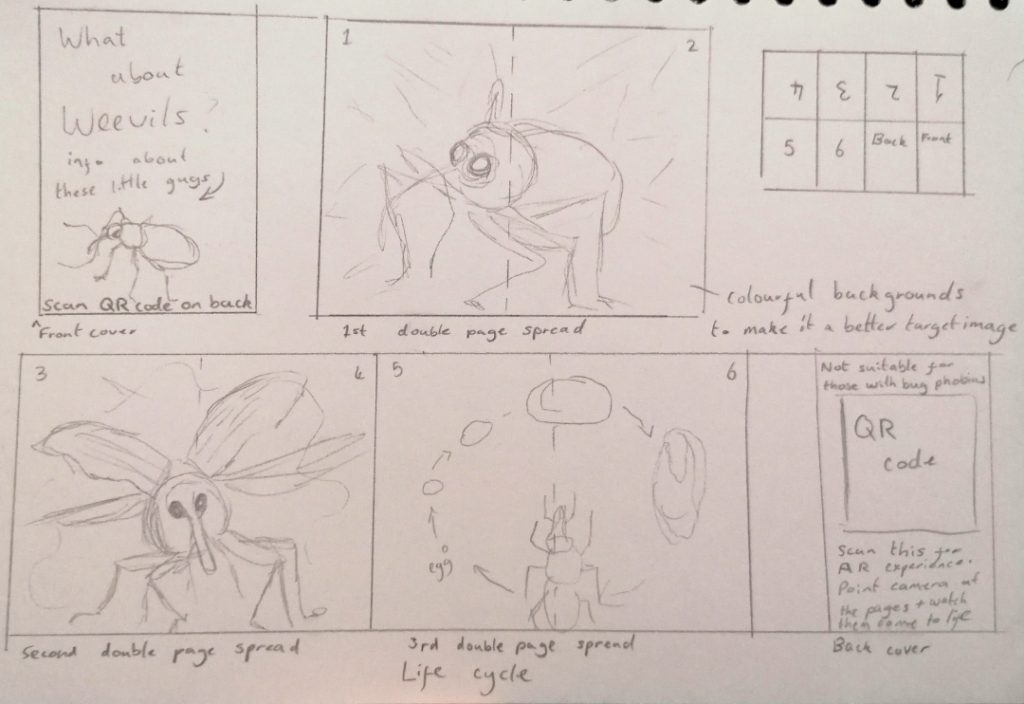
Cover
Title page with note to scan the QR code on the back of the booklet.
Page 1+2
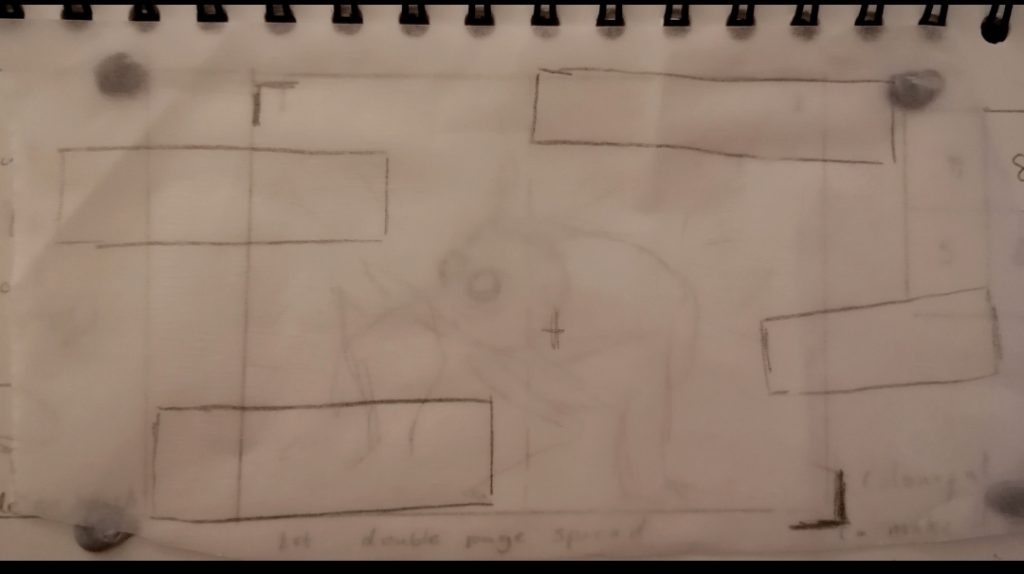
Art of weevil on bright abstract patterned background. AR adds UI/text facts about weevils in colourful pop out boxes.
Page 3+4
Art of different species of weevil on another colourful background. AR displays the annotated 3D model of a weevil.
Page 5+6
Colourful diagram of the life cycle of weevil. AR gives access to a scroll through gallery of the different life stages and other species of weevil.
Back cover
QR code with instructions about how to access the AR content and a warning that the AR experience and zine may not be suitable for people with a fear of insects or beetles to ensure informed consent is given to access the experience.
I will be creating colourful art to make it enticing and more exciting as an educational resource.
Art inspiration
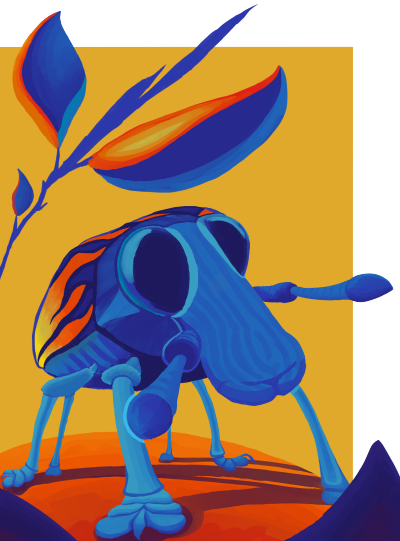
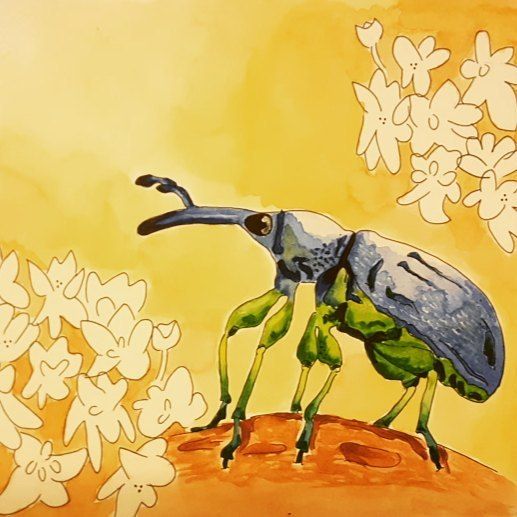
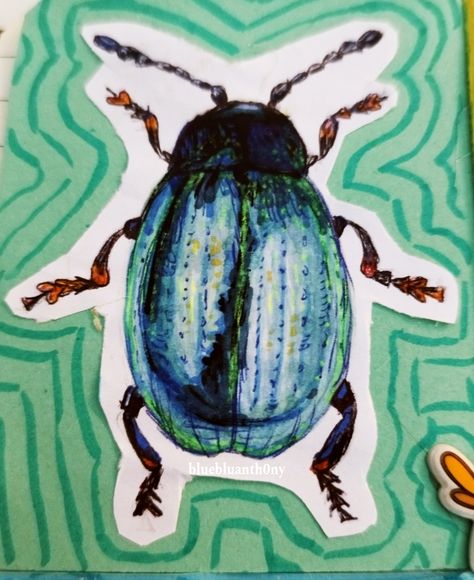
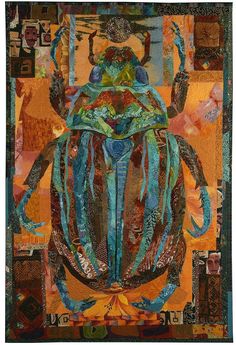
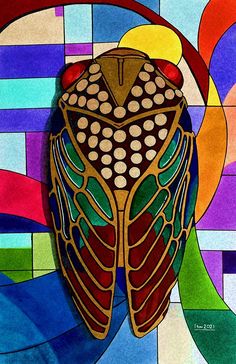
What i like and dont like about these pieces of art and colour scheme what i will take as inspiration from them.
I like the bright high contrast complimentary colours however due to the brightness there might not be much contrast in the values of the colours in some of these images making them less suited to tracking. I like the perspective in the first two images as bugs are often drawn or photographed from above a view from in front of them is much more interesting to look at and also shows their anatomy more clearly; in my pieces I will use similar perspectives to show their legs and faces in my art.
The first two probably have too much space that is one colour in the background to be an image tracking target so I plan to create interesting patterned backgrounds for my art.
Colour scheme and background inspiration
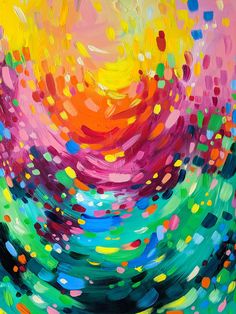
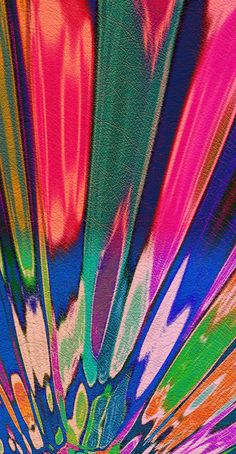
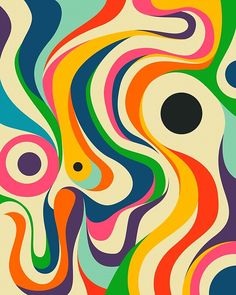
I looked at some colourful, non-repeating abstract art as inspiration for the backgrounds to use in my art.
My goal is to create backgrounds with high contrast in hue and value as complimentary colours that are the same brightness might confuse the tracker.
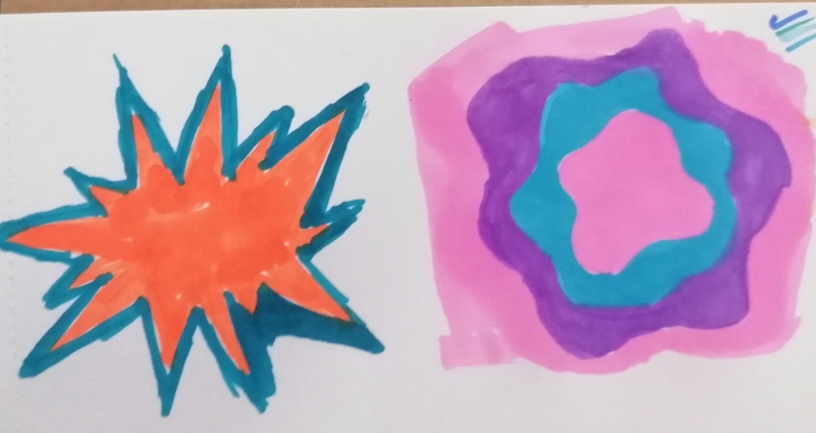
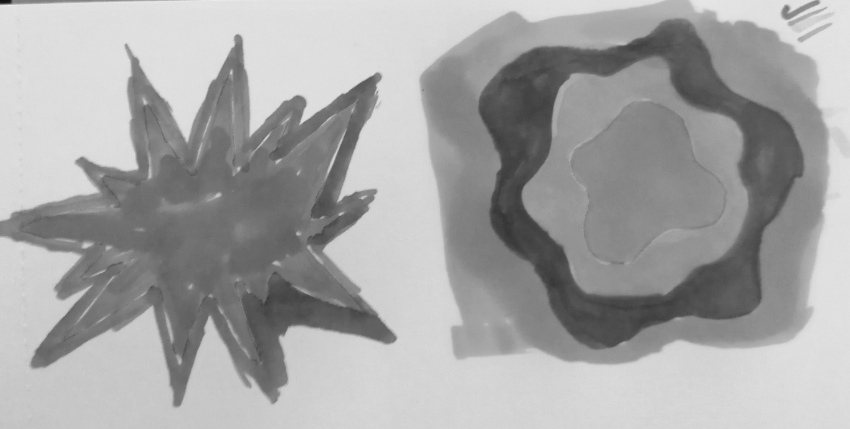
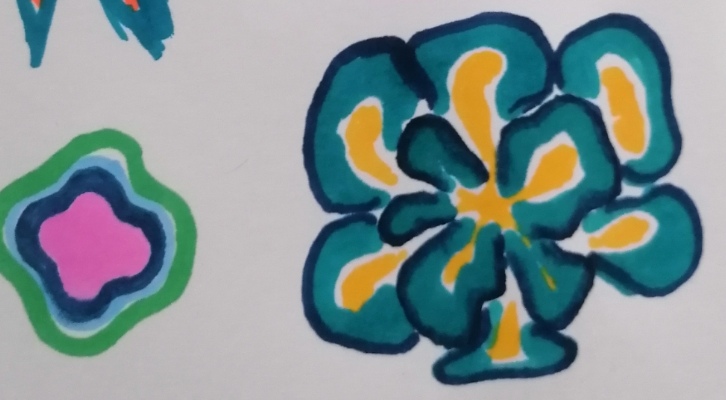
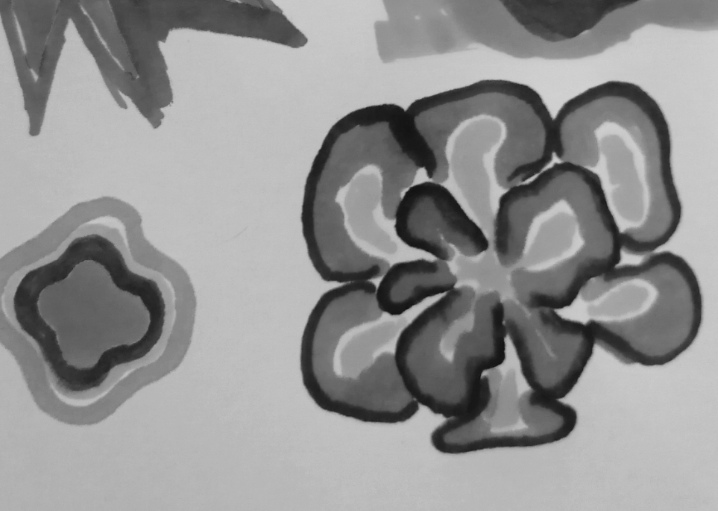
By using a black and white filter, I was able to check how much contrast there was in the value of the colours I picked. In the first test despite the colours being opposites there was almost no value difference between the turquoise and orange so I changed to a new colour scheme focusing on each colour having a different value.
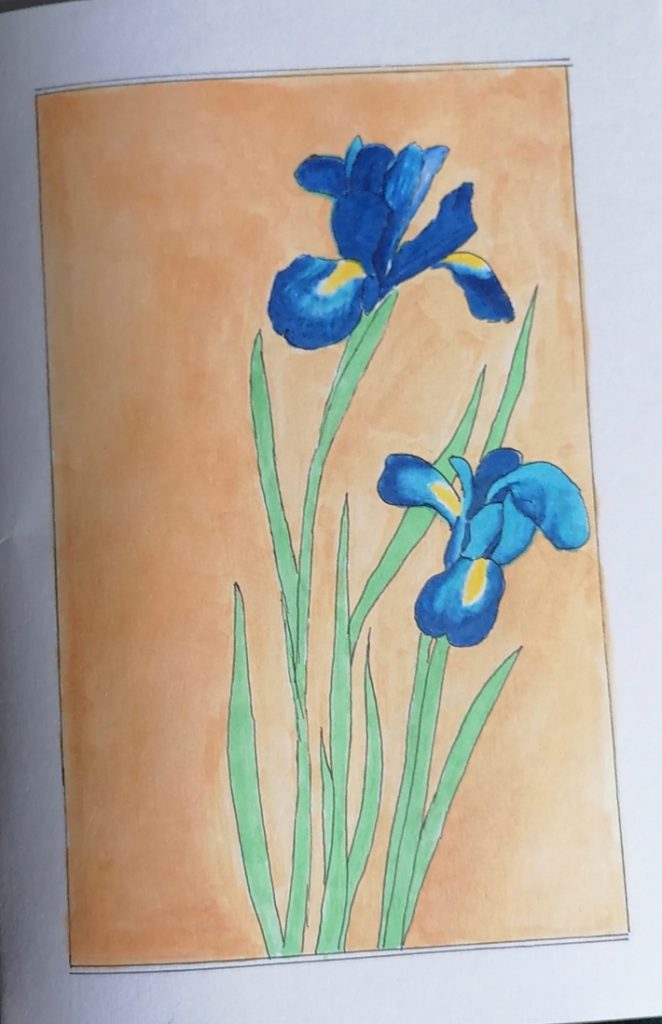
I tried a less repetitive pattern with higher contrast colours using dark blue, a mid tone turquoise blue and yellow that was inspired by art I made of blue irises.
References for annotated model
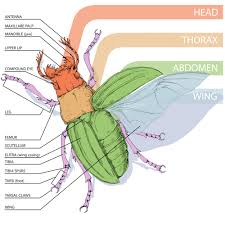
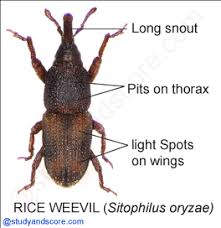
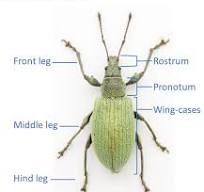
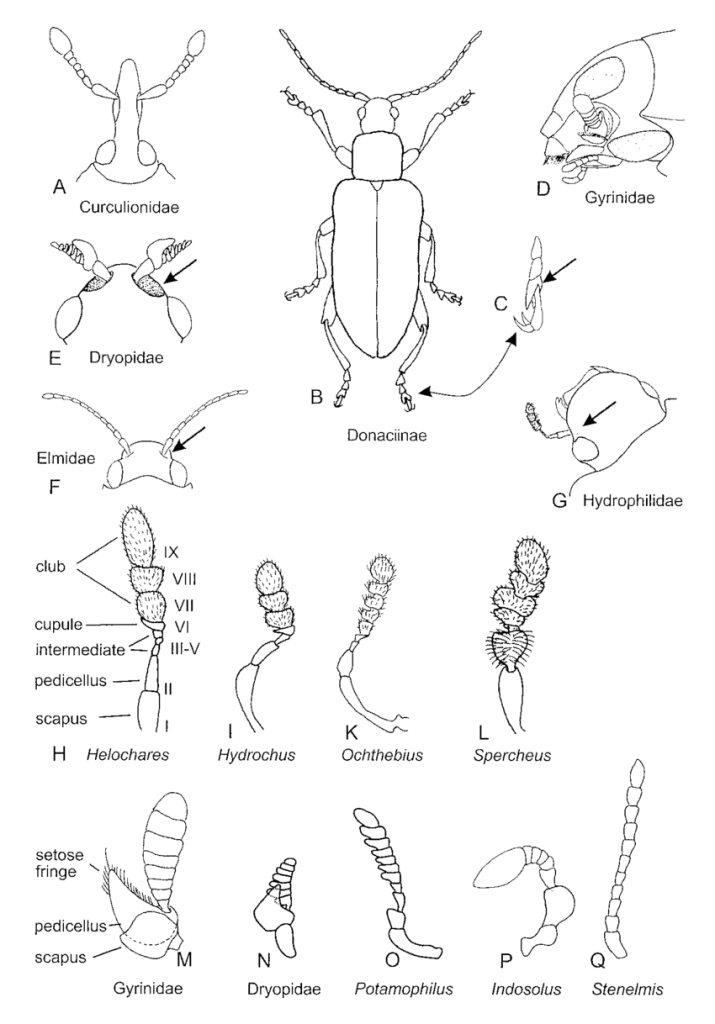
Style inspiration for the model
The style for the annotated model will be realistic but not too detailed like a scientific diagram in order to convey the anatomical information without overcomplicating the model. The model will be textured with simple colours to distinguish the different parts of the anatomy.
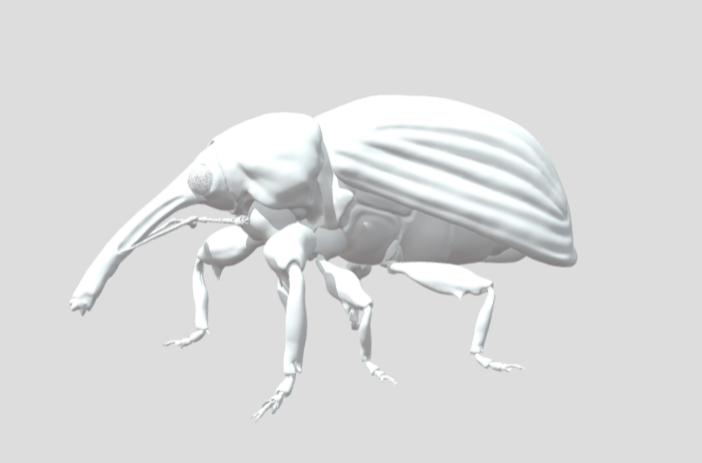
I am aiming to create a weevil model with this amount of detail or slightly more simplified as the detail on the back and snout may lead to larger file sizes making the web based AR more difficult to run and a more difficult time creating the model.
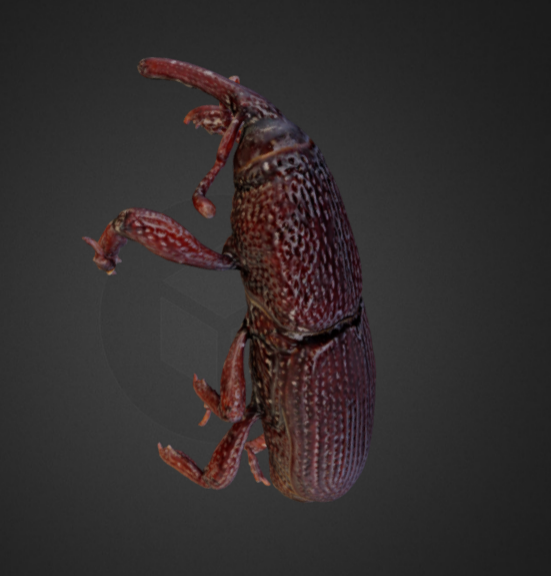
This 3D model is made from scans of a real weevil, this is much more detailed than I am aiming for especially with the textures which are very complex and realistic. Instead I am going to texture my model to be colour coded to the annotation labels.
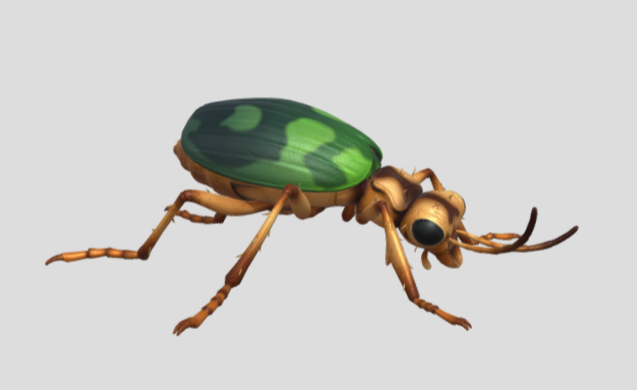
This beetle model from Sketchfab is a good representation of how I plan to texture my model with bright colours and one consistent material.
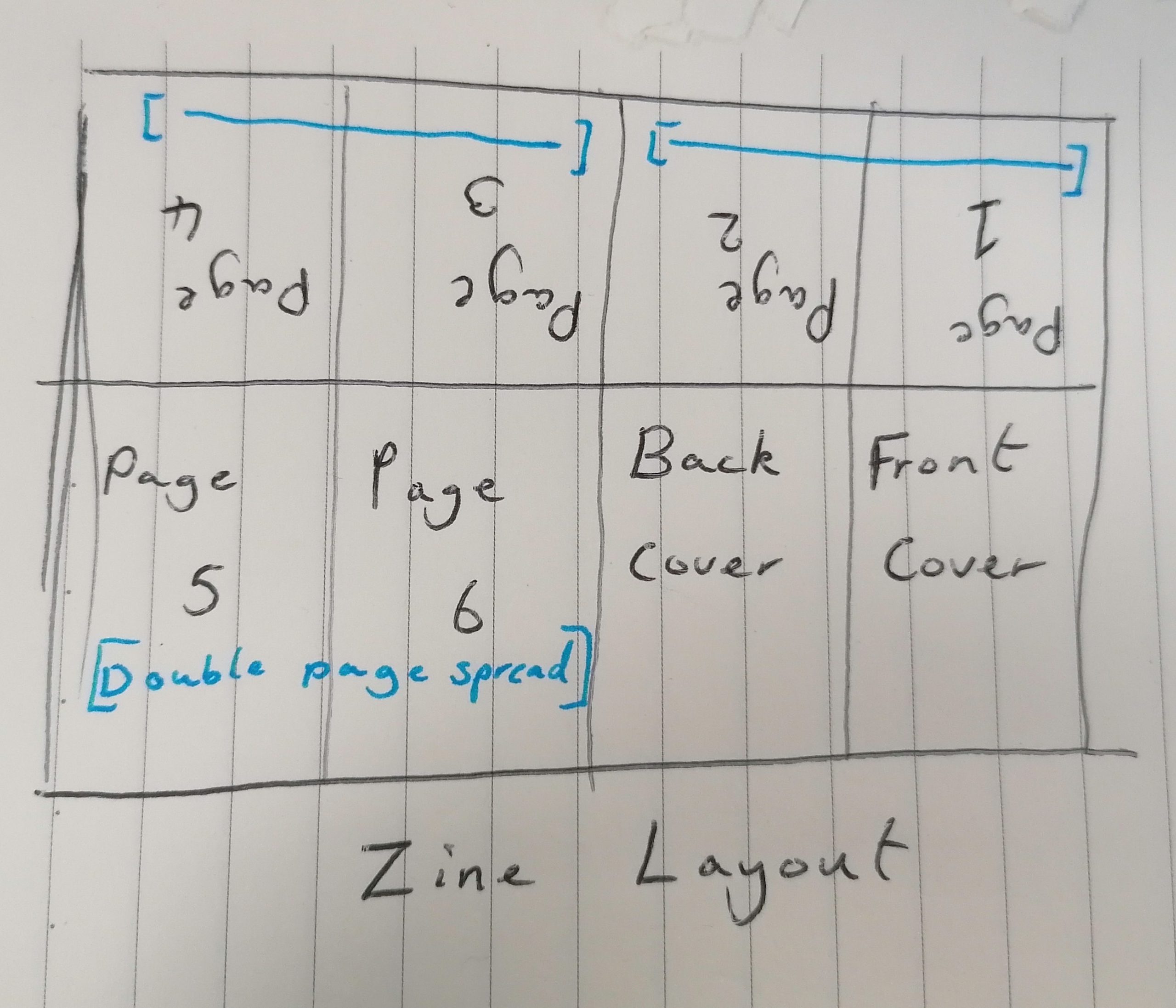
A rough diagram I made of how the pages of the zine are laid out when it is unfolded so I can use it as a guide for formatting the art before printing it.
Ethics, accessibility and inclusivity
AR is only accessible to those with portable devices with cameras and internet access so my experience would be inaccessible to those without mobile phones.
AR can cause distractions from the real world and may need disclaimers to not be used while walking or driving, seeing as my idea fits into a more educational setting it is safe to assume it would be used in mostly indoor learning environments like schools or museums. As the AR aspects are marker based, the experience is only dependant on being able to look at the zine through a mobile device; this means it is accessible to people with limited mobility as unlike AR experiences that rely on looking and moving around an environment the zine can be experienced while sitting down without moving around. It can also be shared with other people as multiple users can look through one device at a time to see the AR assets. This could lend itself to use in classrooms where there may be a limited amount of mobile devices between students.
Due to it being a short AR experience an augmented zine does not run the same ethical risks as other forms of extended reality as it would likely be too short to become addictive and cause social isolation and would not have a large psychological impact unless someone either had a phobia of bugs or was scared of the horror zine, but by getting informed consent before starting the experience this could be prevented entirely.
References
andrew s.yang (2014) Some zines prepped for the Chicago Alternative Comics Expo (CAKE) ! [Photograph] Available online: Zines for CAKE [Accessed: 10/10/24]
Archaos BIAC (2018) Adrien M & Claire B – Mirages & miracles / BIAC 2019 [Video] Adrien M & Claire B – Mirages & miracles / BIAC 2019 [Accessed: 19/10/24]
AWhimsicalMenagerie (2024) Cicada Drawing Original Art Titled Transformation Brood X [Art Markers] Cicada Drawing Original Art Titled Transformation Brood X – Etsy Australia [Accessed: 28/10/24]
bluebluanth0ny (n.d.) bug! [Traditional Art] bug! [Accessed: 28/10/24]
Catherine M. Yule (2012) Figure 1. [Diagram] A-head of weevil, dorsal view; B-adult leaf beetle; C-hind-tarsus of… | Download Scientific Diagram [Accessed: 20/10/24]
deebaker23 (n.d.) [Watercolour] Pin page [Accessed: 31/10/24]
Florida’s Nature (n.d.) Florida Beetles and Bugs. Florida Beetles and Bugs [Accessed: 29/10/24]
Gatis Zvejnieks (2022) Marker-based vs markerless augmented reality: pros, cons and examples [Photograph] Marker-based vs markerless augmented reality – Overlyapp [Accessed: 19/10/24]
ID220X22 (2019) making objects always facing the camera. 27 July. making objects always facing the camera – Autodesk Community – Maya [Accessed: 30/10/24]
JazzberryBlue (n.d.) STRANGER. STRANGER by JazzberryBlue | Redbubble [Accessed: 28/10/24]
Mark Gurney (2016) Bits of a weevil. Bits of a weevil | From an identification guide to British w… | Flickr [Accessed: 20/10/24]
meddibi (n.d.) Untitled. Pin page [Accessed: 23/10/24]
mgnickell (2021) Weevil: Anthonomus grandis [3D Model] Weevil: Anthonomus grandis – 3D model by mgnickell (@mgnickell) [2a3eea7] [Accessed: 02/11/24]
Mohd Hamza (2021) Use touch to scale, rotate and drag AR objects | UNITY AR Foundation (ARKit & ARCore) | LeanTween [Video] Use touch to scale, rotate and drag AR objects | UNITY AR Foundation (ARKit & ARCore) | LeanTween [Accessed: 24/10/24]
naviogutierrezdavid (2023) Bombardier Beetle [3D Model] Bombardier Beetle – Download Free 3D model by naviogutierrezdavid (@naviogutierrezdavid) [e445f1e] [Accessed: 02/11/24]
Passifou (n.d.) Untitled. Pin page [Accessed: 28/10/24]
Sarah Coey Art (n.d.) [Acrylic Paint] Sarah Coey Art [Accessed: 26/10/24]
sciencebydoing (2014) Granary Weevil [3D Model] Granary Weevil – 3D model by sciencebydoing (@sciencebydoing) [7cd65b5] [Accessed: 02/11/24]
Studyandscore (2017) Pest of rice (Sitophilus oryzae): Distribution, Life cycle, Nature of damage and Control measures. Pest of rice (Sitophilus oryzae): Distribution, Life cycle, Nature of damage and Control measures | Study&Score [Accessed: 28/10/24]
SUTU.EATS.FLIES (2014) Modern Polaxis Augmented Reality Comic Book Trailer [Video] Modern Polaxis Augmented Reality Comic Book Trailer on Vimeo [Accessed: 26/10/24]
tarantula-wizard (2023) Invertober Day 5: Citrus Root Weevil (Diaprepes abbreviatus) [Digital art] https://www.tumblr.com/tarantula-wizard/730431282639765504/invertober-day-5-citrus-root-weevil-diaprepes?source=share [Accessed: 27/10/24]
Tarodev (2021) Scroll View in Unity – 2021 Tutorial [Video] Scroll View in Unity – 2021 Tutorial [Accessed: 30/10/24]
The Skye Zine Library (n.d.) Skye Zine Library [Photograph] The Skye Zine Library | ATLAS English [Accessed: 10/10/24]
Zapworks (2024) Zapworks: The Most Powerful All-In-One WebAR platform. Zapworks: The Most Powerful All-In-One WebAR platform [Accessed: 19/10/24]